When it comes to books, I'm pretty impartial.
I love the sensation of buying a brand new book-- feeling the pages crisp between my fingers, reminding me of the peculiarly slick feel of the old edition of the Chronicles of Narnia that I had growing up, the smell it had of slippery paper and dark ink, knowing that an entirely new world waits for me behind a glossy cover and binding which has not yet been cracked from endless readings and wear, pages unbesmirched from the death grip my index finger and thumb will put on them while I reach the climax of the plot, bringing me back to fruitful Christmases and Birthdays and allowance-sprees where I would return to my bedroom and stack the books up as tall as my bed, waiting to be opened...
I also love buying used books, browsing through frumpy, disorganized shelves of musty tomes and well-loved novels that have seen their day and more, the golden yellow pages of the 50s, the beautiful, wood and leaf mold smell of the 60s, musing over past-printings and constantly wondering with a sense of joyful suspense if I will find the one book I am not even actively looking for, a gem hidden among pages and glue and words lost in a mine field of literature...
They're both means of acquiring books that I couldn't do without. Perhaps that makes me a literary two-timer, but I don't care. I'm greedy. I had a library card when I was younger, but I very rarely went to the public library. I would read endlessly out of school libraries because they were there when I was there, and I could not resist wandering down the halls to the rows and rows of entertainment and adventure spread out before me. I spent 8+ hours a day in these academic institutions. Plenty of time to read. Plenty of time to spend lunch breaks nose-deep in a book, recesses shadowed by pages, and even (she says blushingly) hiding opened books under my desk so that I could read during class...
Beyond the school libraries, though, I wanted to own the books. I wanted to possess them and have them close so I could read them again and again and again. I wanted to mark my name in them in a juvenile hand and caress the pages, knowing that these were my private library, the doorway to my thoughts and dreams.
These days there is a lot of back-and-forth argument for who has it worse-- the company book store or the used book store. There's no denying it, book stores in general are having a tough time. It's a difficult economy, and publishing being in the flux that it is doesn't help. But you look at the arguments, look at the facts, and I'd say that both used book stores and company book stores are having equally difficult years, for many different (and many of the same) reasons.
The fact is, everything is 'easier' online. Whether it be eBooks, eReaders, Amazon.com, or other means of acquiring literature via technology rather than an in-person visit to a store, there is now competition for the physical locations we know as book stores. And it comes with Prime free shipping and a greater variety of choices. That causes trouble for both types of book stores, not just one, and each one's strengths give way to the other's weaknesses.
Browsing a used or new book store is fun. It's delightful. It's satisfying. But it doesn't always give us what we're looking for, what we want. Out of print books are not available in Barnes & Noble, for example, and you may find them, maybe, in a used book store if you're lucky. If you're on a mission, though, best to go online.
I do it all the time. I can get wildly cheap books that I can very rarely find anywhere else on Amazon.com. I still love going to book stores of any breed, but if I'm going to buy a book, 7 times out of 10 I'm going to get it online. It's just convenience.
Still, Manta.com states that there are 34,598 bookstores in the US. Give or take, I imagine. That's still quite a lot. That's on average 690 bookstores per state (considering of course per size of state and square mileage and...you get the idea).
Are book stores in trouble? Yes, sure, I would definitely say they are. Is one type's troubles more rampant than the other? I seriously doubt it. I know as many if not more used book stores in my immediate area of living than I do company book stores. The economy will hit people and companies hard, and the recent technological advancements say a lot for printed books of any price or quality. It's all tied together.
Wednesday, August 21, 2013
Wednesday, August 14, 2013
Another 18-Hours in the Day Would Be Nice...
Kevin Ashton, co-founder of the MIT Auto-ID center, wrote "Why (and How) Creative People Need to Say 'No'". Intrigued, I gave it a read, wondering what 'No' he may be talking about. No to paying publishers to read your work? No to the 'delete' button or the trash bin? No to chocolate covered strawberries?
I resolved, if the latter, to close the webpage immediately out of sheer heresy.
But luckily strawberries were safe, and indeed not even mentioned in this article, which can be forgiven. Instead Ashton outlines the reasons why creative minds of all threads need to learn to say No to using their time for things other than themselves. Selfish? No.
The fact of the matter is, if you write, if you read, if you edit, if you paint, if you draw, if you teach, if you conduct, if you compose, if you scrawl, if you weave...whatever creative thing you may be doing, you are constantly wishing you had more time. I feel this lack keenly because I suffer from not only one artistic need, but two. Both writing and art pull at my free hours, and I am continually complaining that I do not devote the proper time to either. If I am engaging fully in the one, I am invariably neglecting the other. It is nearly impossible to devote the proper time to both in the same day, even in the same week, simply on account of how much time they each individually take up and how much free time I don't have.
There are bills to pay, work to be done, chores to complete, food to cook, people to see, gifts to make, exercise to work in there somehow, and daylight to maybe see once in a while...Ashton reaffirms, quite pithily I might add, that "yes makes less". There is and always will be something else you could be doing. Every moment spent doing one thing is a moment you will not spend doing something else. It is the physical rule of our universe. Multi-tasking is great, but you still have to choose between one thing and another.
Therefore, when it comes to creative work, creative people sometimes have to be very strict with what kind of work they do for other people.
As crazy and disorganized as the artistic brain can be, we have to be incredibly close knit with our work and our time. We have to organize and learn how to do the juggling-balancing-hey-macarana of our lives.
And if someone asks you if the hokey-pokey is what it's all about, you know your answer.
I resolved, if the latter, to close the webpage immediately out of sheer heresy.
But luckily strawberries were safe, and indeed not even mentioned in this article, which can be forgiven. Instead Ashton outlines the reasons why creative minds of all threads need to learn to say No to using their time for things other than themselves. Selfish? No.
The fact of the matter is, if you write, if you read, if you edit, if you paint, if you draw, if you teach, if you conduct, if you compose, if you scrawl, if you weave...whatever creative thing you may be doing, you are constantly wishing you had more time. I feel this lack keenly because I suffer from not only one artistic need, but two. Both writing and art pull at my free hours, and I am continually complaining that I do not devote the proper time to either. If I am engaging fully in the one, I am invariably neglecting the other. It is nearly impossible to devote the proper time to both in the same day, even in the same week, simply on account of how much time they each individually take up and how much free time I don't have.
There are bills to pay, work to be done, chores to complete, food to cook, people to see, gifts to make, exercise to work in there somehow, and daylight to maybe see once in a while...Ashton reaffirms, quite pithily I might add, that "yes makes less". There is and always will be something else you could be doing. Every moment spent doing one thing is a moment you will not spend doing something else. It is the physical rule of our universe. Multi-tasking is great, but you still have to choose between one thing and another.
Therefore, when it comes to creative work, creative people sometimes have to be very strict with what kind of work they do for other people.
Management writer Peter Drucker: “productivity in my experience consists of NOT doing anything that helps the work of other people but to spend all one’s time on the work the Good Lord has fitted one to do, and to do well.”
Charles Dickens: “‘It is only half an hour’–’It is only an afternoon’–’It is only an evening,’ people say to me over and over again…Who ever is devoted to an art must be content to deliver himself wholly up to it, and to find his recompense in it.”And, as Ashton puts it so eloquently:
Time is the raw material of creation. Wipe away the magic and myth of creating and all that remains is work: the work of becoming expert through study and practice, the work of finding solutions to problems and problems with those solutions, the work of trial and error, the work of thinking and perfecting, the work of creating. Creating consumes. It is all day, every day. It knows neither weekends nor vacations. It is not when we feel like it. It is habit, compulsion, obsession, vocation. The common thread that links creators is how they spend their time. No matter what you read, no matter what they claim, nearly all creators spend nearly all their time on the work of creation. There are few overnight successes and many up-all-night successes.How do we learn to say this? Not only do we have to be very strict with those who need or want our time, but we have to be very strict with ourselves. I could spend this evening reading another fifty pages in my historical fiction, or I could spend it working on my book. I could spend an hour or so here and there goofing off on Facebook, or I could spend it researching reference pictures or reading my technique book on painting, or, heck, painting itself. How much time should we spend on any one thing?
As crazy and disorganized as the artistic brain can be, we have to be incredibly close knit with our work and our time. We have to organize and learn how to do the juggling-balancing-hey-macarana of our lives.
And if someone asks you if the hokey-pokey is what it's all about, you know your answer.
Wednesday, August 7, 2013
Self Publishing -- A How-To Guide
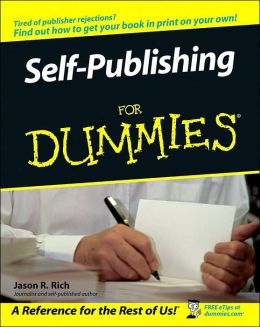
So you've heard about the self-publishing thing. You've maybe even given it some thought. It sounds kinda good. It also sounds like a lot of work. And there isn't exactly a cohesive "Successful Self-Publishing for Dummies: How to get a Book Contract, Movie Contract, and Souvenir Tin Lunchbox Deal" available at Barnes & Noble. Though maybe there should be. If you write it, it'd better be dedicated to me. And I want a free lunchbox.
Now, though, Michael Hyatt has put together a step-by-step TO-DO list for self-publishing. It's less a "you need to do this at 8:08 am on Thursday the 19th or you'll fail" list and more a check list for the avid self-publisher starting off. Interested in self-publishing? Here are some things to get you going and help you along the way!
And believe me, having a succinct check list to go off of is better than gold. Though maybe not better than lunchboxes.
Hyatt calls it his "How to Successfully Self-Publish a Kindle eBook," but the advice is also good for any self-publishing form. Whether you do it through Amazon.com or a more close-to-the-chest way, you'll need to know some of these pitfalls to avoid and steps to take.
First Hyatt draws attention to Amazon.com (remember them, again?). Here are just a few of the reasons he suggests using Amazon as your publishing platform:
Step one. Write your book. Duh.
Step two. Make it look good. And professional. Get it formatted for eBooks. This may very well take some money, which if you don't have could be potentially a problem. But there are ways around all of that. You can run a personal kick starter. You can ask your grandmother for an early Christmas present. You can cry in the streets. You can try to do it yourself (but don't sacrifice quality for "personal-ity". Just don't.)
Step three. Publish your book. This is a bit more complicated, but Hyatt goes through it step by single step just like everything else. He even gives you a guide of what your computer will look like when uploading to Amazon.com, complete with "Save & Continue" steps and what pop-ups you may deal with.
Step four. Promote, Promote, Promote. Promote via Amazon. Promote via Facebook. Promote via email and Twitter and Blog and Friends and Friends of Friends and Family members. Get reviews written about your book. The more reviews you have, the more your book will sell. Kind of like how on Twitter the more people you follow, the more people follow you. It's a weird cycle.
And lastly, Step five. Launch your book. This is basically a combination of Steps three and four. Get your book to spread by offering deals, gifts, discounts, by spreading the word that is You. Hyatt offers various different tips and websites that can help you with this. Take advantage of them.
And that's it. Steps four and five bear continual upkeep, hence the time-consume that self-publishing can have, and every time you come up with a book, you have to repeat the whole scenario. You are the publishing company in one, and that includes writing, editing, art, publishing, and marketing. It takes a lot of work. It takes a lot of time. It may, to start with, take some money.
You can do it. And this guide will make it all the easier.
Now, though, Michael Hyatt has put together a step-by-step TO-DO list for self-publishing. It's less a "you need to do this at 8:08 am on Thursday the 19th or you'll fail" list and more a check list for the avid self-publisher starting off. Interested in self-publishing? Here are some things to get you going and help you along the way!
And believe me, having a succinct check list to go off of is better than gold. Though maybe not better than lunchboxes.
Hyatt calls it his "How to Successfully Self-Publish a Kindle eBook," but the advice is also good for any self-publishing form. Whether you do it through Amazon.com or a more close-to-the-chest way, you'll need to know some of these pitfalls to avoid and steps to take.
First Hyatt draws attention to Amazon.com (remember them, again?). Here are just a few of the reasons he suggests using Amazon as your publishing platform:
- Amazon is largest paid search engine in the world. People don’t Google things with their credit cards out, ready to buy, like they do with Amazon.
- Amazon is a marketing machine. Once you start selling a certain number of copies, it refers your book to others who have never heard of you.
- Amazon makes it easy. You can publish elsewhere, but few places get your book online and ready in a matter of hours.
- Amazon dominates the book market.
From there Hyatt goes through the whole process in five easy steps, succinctly broken down into numbered lists that will guide you from concept to publication. It really couldn't be easier. Unless someone did it for you. But then, that's what we call traditional publishing. And getting into traditional publishing makes up for the difficulty of self-publishing on your own. It evens out.Yeah Amazon. I'm looking at you.
Step one. Write your book. Duh.
Step two. Make it look good. And professional. Get it formatted for eBooks. This may very well take some money, which if you don't have could be potentially a problem. But there are ways around all of that. You can run a personal kick starter. You can ask your grandmother for an early Christmas present. You can cry in the streets. You can try to do it yourself (but don't sacrifice quality for "personal-ity". Just don't.)
Step three. Publish your book. This is a bit more complicated, but Hyatt goes through it step by single step just like everything else. He even gives you a guide of what your computer will look like when uploading to Amazon.com, complete with "Save & Continue" steps and what pop-ups you may deal with.
Step four. Promote, Promote, Promote. Promote via Amazon. Promote via Facebook. Promote via email and Twitter and Blog and Friends and Friends of Friends and Family members. Get reviews written about your book. The more reviews you have, the more your book will sell. Kind of like how on Twitter the more people you follow, the more people follow you. It's a weird cycle.
And lastly, Step five. Launch your book. This is basically a combination of Steps three and four. Get your book to spread by offering deals, gifts, discounts, by spreading the word that is You. Hyatt offers various different tips and websites that can help you with this. Take advantage of them.
And that's it. Steps four and five bear continual upkeep, hence the time-consume that self-publishing can have, and every time you come up with a book, you have to repeat the whole scenario. You are the publishing company in one, and that includes writing, editing, art, publishing, and marketing. It takes a lot of work. It takes a lot of time. It may, to start with, take some money.
You can do it. And this guide will make it all the easier.
Maudlin's August Reading List
You know what—I’ve been inspired to make my own reading list! Here it is, folks,
Maudlin’s Books of the Week!
9. I, Robot, Isaac Asimov
10. Unfinished Tales, J.R.R. Tolkien
1.
Ombria in Shadow, Patricia McKillip
2.
Young Miles, Lois McMaster Bujold
3.
The Left Hand of Darkness, Ursula K. LeGuin
4.
Outlander, Diana Gabaldon
5.
The Road, Cormac McCarthy
6.
Beauty, Robin McKinley
7.
Howl’s Moving Castle, Diana Wynne Jones
8.
White Fang, Jack London
Wednesday, July 31, 2013
Ignorance May Be Bliss...
I've only met one 'well-known' author in my life. I've met several smaller authors too, who I consider to be as equally successful if in less public ways. The author I met, though, was Brian Jacques, children's author of the Redwall series, and a hero of mine growing up. I read every book of his I could get my hands on. I still daydream about finishing off the collection, now that he's passed, just so I can have it for my nieces and nephews, or possible children of my own.
He was everything I hoped he'd be. A kindly old gentlemen with a michevious twinkle in his eyes that befitted his more lop-eared characters, and he told tale after tale of getting into trouble in his youth, like the time he and a friend (sibling?) snuck into the theater and threw a cat down into the audience from the balcony. He teased me when I handed him my favorite book, Taggerung, because it already had my name scrawled into it in a childish font. "This book already has a name in it!" he exclaimed, before signing it with a smile.
I still have that book, and those memories. My sister, my friend, and I sang him a version of one of his songs in a book, about pudding, and he seemed delighted. It was something I won't forget anytime soon.
But what happens when you meet an idol of yours, and they're not all you thought they'd be? What if the reality of their character destroys the image you had of them? What do you do then?
Margo Rabb of the New York Times wrote in her article "Fallen Idols," that she had discovered unpleasant realities about a favorite poet, Rainer Maria Rilke, and his character. In the end, she says that she wishes "she hadn't." She ran across the poet's biography online and discovered that he was, as she puts it,
But what if he had been a horrible person? Selfish, jealous, greedy, lazy? Would I have felt poorly about him, about his books, about myself for being 'taken in' by a self-induced glaze of authorly glory?
Perhaps we put too much of an author's books onto their character, forgetting that the two don't necesarilly go hand in hand. Rabb agrees, saying,
Sometimes, however, it's good to remember that our idols are real people too. Some people, Rabb says, enjoy discovering the bad sides of their favorite authors, because it helps them with their own failings. Or maybe they're just reality-tv-watching readers who love the dirt. I like dirt, but usually the kind with more...soil...in it.
In the end, it's important not to fan crush on an author because their book is so good. When you read something, you don't know anything about the author. You know something about their imagination, which may be a whole lot nicer than they are.
Rabb concludes by saying that,
He was everything I hoped he'd be. A kindly old gentlemen with a michevious twinkle in his eyes that befitted his more lop-eared characters, and he told tale after tale of getting into trouble in his youth, like the time he and a friend (sibling?) snuck into the theater and threw a cat down into the audience from the balcony. He teased me when I handed him my favorite book, Taggerung, because it already had my name scrawled into it in a childish font. "This book already has a name in it!" he exclaimed, before signing it with a smile.
I still have that book, and those memories. My sister, my friend, and I sang him a version of one of his songs in a book, about pudding, and he seemed delighted. It was something I won't forget anytime soon.
But what happens when you meet an idol of yours, and they're not all you thought they'd be? What if the reality of their character destroys the image you had of them? What do you do then?
Margo Rabb of the New York Times wrote in her article "Fallen Idols," that she had discovered unpleasant realities about a favorite poet, Rainer Maria Rilke, and his character. In the end, she says that she wishes "she hadn't." She ran across the poet's biography online and discovered that he was, as she puts it,
"a selfish, sycophantic, womanizing rat"Not the most glowing of endorsements. Do we feel crushed when we discover someone we thought was so nice is actually not as shiny and pretty as we thought? Do we shrug it off as reality? Do we even go searching? Perhaps we, as invested writers, should avoid learning about authors in a form of self-preservation. Rabb quotes Laurie Anderson, who
"feels that biographies can make authors lose their luster. 'A book is like sausage,' she told me. 'You love the end product, but you don’t really want to know how it’s made.'"I for one enjoyed immensely the biography of one of my favorite authors, J.R.R. Tolkien. It was an intriguing history about an intriguing genius who created the backbone of modern-day fantasy. I felt closer to the author after reading it, even a little bit.
But what if he had been a horrible person? Selfish, jealous, greedy, lazy? Would I have felt poorly about him, about his books, about myself for being 'taken in' by a self-induced glaze of authorly glory?
Perhaps we put too much of an author's books onto their character, forgetting that the two don't necesarilly go hand in hand. Rabb agrees, saying,
"Falling in love with a book is a unique and sometimes strange experience; it’s not hard to make the leap from adoring a novel to adoring its creator."Author Justin Cronin agrees, saying about authors (and about himself) in general,
"When you read a book, you spend hours in intimate contact with the mind of another person — it’s an intense, but one-sided relationship. If any reader knew who we really were, it’s guaranteed they’d find us disappointing."It's like the celebrity crush, as Rabb puts it, or the Facebook syndrome. You feel so much closer to a person who you actually have no clue about. And having that closeness broken hurts.
Sometimes, however, it's good to remember that our idols are real people too. Some people, Rabb says, enjoy discovering the bad sides of their favorite authors, because it helps them with their own failings. Or maybe they're just reality-tv-watching readers who love the dirt. I like dirt, but usually the kind with more...soil...in it.
In the end, it's important not to fan crush on an author because their book is so good. When you read something, you don't know anything about the author. You know something about their imagination, which may be a whole lot nicer than they are.
Rabb concludes by saying that,
"Writers and their books will always be inextricably connected, but the relationship between them isn’t simple."
Thursday, July 25, 2013
Yes, I know, it's Thursday, not Wednesday. All I can say in my defense is deadlines and Tumblr. Not my Tumblr, of course, but someone else's. Which took up about four hours. Which is also why I will never get a Tumblr. You'll never see me again.
So you may have seen on my blog-page yesterday the post from NPR-- the Must Read Science Fiction list. How many can you score? It's a neat little interactive page where you can click on the books you've read, and it'll count them up for you. That way at the end you can know how many you've read. Every 25 reads gets you a gold star for being so literarily awesome.
It has a great list of books on there, and I was surprised by some of the contents of the list. My two favorite authors Robin McKinley and Lois McMaster Bujold were included, and while Bujold is undoubtedly a science fiction author, McKinley deals more in the fantasy realms, and her book Sunshine was listed here-- a vampire novel that is far from Twilight. It's the story of a girl nicknamed Sunshine who lives in a recovering, paranormally-war-torn world and works in a bakery...until she's snatched by vampires.
The thing I love most about Sunshine, beyond its obvious good writing, its well-paced plot, its detail, and its spunk, is that the vampires are more traditional. They're ugly. They're absolutely terrifying. They are the ultimate predators of the human race and turn all people who see them into the immediate staring deer in the headlights. But it doesn't matter, because if they want you, they can make you come to them by sheer power of suggestion and illusion. If you look into their eyes, you're a goner.
I wouldn't have thought it to be science fiction, though. Perhaps paranormal fantasy. But I suppose it could also be paranormal fiction, as well, and it's based in a present-day if urbanly fantastical world. Still, I was pleased and surprised.
Other books on the list? The Once and Future King, The Lord of the Rings, The Foundation Trilogy, Ringworld, and The Left Hand of Darkness.
I was sorely tempted to 'count' those books towards my score that I hadn't read yet but had discussed extensively with various members of my family and the science-fiction fan crowd. Also those of which I've read a book from the series if not the book in question. What's my score on pure honesty? A round, pleasing, single-gold star 28.
If I count everything else? 35.
Out of 100, I'd say that's not bad, but I clearly have a lot of reading to do. And that's what got me more excited about this list than anything. I have a list of about 75 books that I've never read before that are considered the classics of the genre. It's like Christmas come early!
So what am I doing here? I gots readin' to do!!
Thursday, July 18, 2013
Back in the Saddle Again...
Next week starting Tuesday I'm getting back into the writing world...
Why have I been on hiatus so long? Well, with graduation, moving, starting a new job, all the little adjustments that come along with that, and then also a series of art comissions, I've had very little time to dedicate to anything else. I have more free time on my hands but more to fill it with, in a way, simply because every day is kept so full. Also, starting a new workout regimen has not helped in the 'free time' area. Gym three times a week means that's two hours less to spend on writing three times a week.
But all of these are merely excuses, and now that the art is at least done in the major sense...I still have two paintings to do, but who's asking...I will indeed plunge into the world of vocabulary and character development on Tuesday.
I don't know about any of the rest of my writer friends, but no matter how well I know the story in my mind, any break of time that lasts for more than, say, a week always requires at least a week of catching up. Next week I will be surprised if I write word one beyond edits. I'll be too busy reading what I have written, in order to catch up with my characters and get back into the voice of the story. Nothing is worse than a book that changes voice halfway through. Readers everywhere will wonder, what, did this author move and paint a lot between writing these sections?
Yeah. Like that.
It's amazing the mind's ability to remember, but also the mind's ability to forget, especially in regards to what it has created. It happens quite often that I'll read something I've written-- usually something I am very impressed with at the time-- and have no recollection of writing it. Maybe I have a super hero identity that even I don't know about. A super hero writer! I am AuThor. Beware my mighty pen!
Or keyboard. My handwriting is so bad that I almost never hand write my work anymore, unless I have an idea that just can't wait while I'm out and about. I used to carry a notebook with me wherever I went just so I could suddenly burst into random fits of prose. Alas, that was long ago, and my mind is often preoccupied with other things.
I wish there was a way to get back that initial rush of creativity when I first started writing. I had a period of perhaps three, four years where every spare moment was imagining new worlds and tales and characters-- followed by hours and hours of every-moment-counts writing.
But I digress. It takes a lot of stretching and verbal readjusting before I'm ready to write again. I will likely have to reread everything that I've already written before I'm even remotely prepared to pitch into finishing the chapter I had left half-undone before taking my break. But once I'm done with that, the book will be halfway finished.
And this is it, people. I think this will be 'the One'. I have of course written copious short stories and poems, and I have my Trilogy which is my brain baby, and I still want to see it published someday. But this one I think will be the breaker. I've never heard of anyone doing this before, nor exactly in this way, and it's by far the best writing I've ever done. So I'm really excited to finish it and get it sent out there!
So why is it taking me so long? Sigh...well, you know what they say about patience. It's a virtue isn't it?
Speak not the word slothfulness. It's not the same thing.
Why have I been on hiatus so long? Well, with graduation, moving, starting a new job, all the little adjustments that come along with that, and then also a series of art comissions, I've had very little time to dedicate to anything else. I have more free time on my hands but more to fill it with, in a way, simply because every day is kept so full. Also, starting a new workout regimen has not helped in the 'free time' area. Gym three times a week means that's two hours less to spend on writing three times a week.
I don't know about any of the rest of my writer friends, but no matter how well I know the story in my mind, any break of time that lasts for more than, say, a week always requires at least a week of catching up. Next week I will be surprised if I write word one beyond edits. I'll be too busy reading what I have written, in order to catch up with my characters and get back into the voice of the story. Nothing is worse than a book that changes voice halfway through. Readers everywhere will wonder, what, did this author move and paint a lot between writing these sections?
Yeah. Like that.
It's amazing the mind's ability to remember, but also the mind's ability to forget, especially in regards to what it has created. It happens quite often that I'll read something I've written-- usually something I am very impressed with at the time-- and have no recollection of writing it. Maybe I have a super hero identity that even I don't know about. A super hero writer! I am AuThor. Beware my mighty pen!
Or keyboard. My handwriting is so bad that I almost never hand write my work anymore, unless I have an idea that just can't wait while I'm out and about. I used to carry a notebook with me wherever I went just so I could suddenly burst into random fits of prose. Alas, that was long ago, and my mind is often preoccupied with other things.
I wish there was a way to get back that initial rush of creativity when I first started writing. I had a period of perhaps three, four years where every spare moment was imagining new worlds and tales and characters-- followed by hours and hours of every-moment-counts writing.
But I digress. It takes a lot of stretching and verbal readjusting before I'm ready to write again. I will likely have to reread everything that I've already written before I'm even remotely prepared to pitch into finishing the chapter I had left half-undone before taking my break. But once I'm done with that, the book will be halfway finished.
And this is it, people. I think this will be 'the One'. I have of course written copious short stories and poems, and I have my Trilogy which is my brain baby, and I still want to see it published someday. But this one I think will be the breaker. I've never heard of anyone doing this before, nor exactly in this way, and it's by far the best writing I've ever done. So I'm really excited to finish it and get it sent out there!
So why is it taking me so long? Sigh...well, you know what they say about patience. It's a virtue isn't it?
Speak not the word slothfulness. It's not the same thing.
Subscribe to:
Posts (Atom)